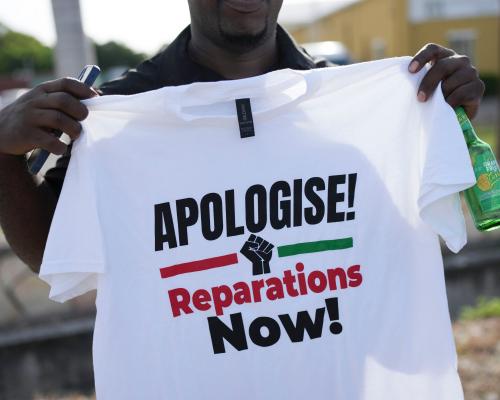
The debate in much of the British media over reparations(赔偿) has focused almost entirely on cash payments: how much Britain might owe for its role in transatlantic enslavement, who should pay and whether people today should be held responsible for the actions of those who came before them.(英国因其在大西洋奴隶贸易中的角色可能欠下多少,谁应该支付,以及今天的人是否应为前人的行为负责。)
英国媒体关于赔偿的讨论几乎完全集中在现金支付上:英国因其在大西洋奴隶贸易中所扮演的角色可能欠下多少,谁应该支付,以及今天的人是否应该为前人的行为负责。
But some campaigners warn that this narrow focus(狭隘的关注) overlooks(忽视) the broader goals of the reparations movement.
但一些活动人士警告说,这种狭隘的关注忽视了赔偿运动更广泛的目标。
Eleanor Shearer, a senior research fellow(研究员) at Common Wealth, said: “I think we’re missing the root of the word(这个词的词根) itself, which is repair. It’s about this idea that something has been broken, continues to be broken and we need to work together to fix and to heal.(它关乎这样一种理念:某些东西已经被破坏,且仍在被破坏,我们需要共同努力去修复和疗愈。)
Common Wealth 高级研究员埃莉诺·希勒表示:“我认为我们忽略了这个词本身的词根,即‘修复’。它关乎这样一种理念:某些东西已经被破坏,且仍在被破坏,我们需要共同努力去修复和疗愈。
Return of cultural artefacts
文化物品归还