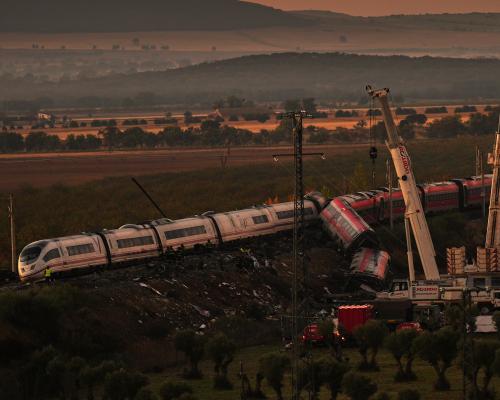
A week ago today, for the second time in nine months, I got in my car and drove south from Madrid to cover(报道) a deadly train crash.
一周前的今天,我开车从马德里南下,去报道一起致命的火车事故——这是九个月内的第二次。
At 8.53am last Wednesday, a high-speed train operated by Spain’s state-owned rail company, Renfe, smashed into the back of a stationary train run by the private rail company Iryo, on the outskirts of the small town of Urda in Castilla-La Mancha.(上周三上午8点53分,在卡斯蒂利亚-拉曼恰小镇乌尔达的郊外,一列由西班牙国有铁路公司Renfe运营的高速列车撞上了一列由私营公司Iryo运营的静止列车的尾部。) Sixty-nine people died in the accident, more than 100 were injured, and Spain’s already depleted(耗尽的,大幅减少的) confidence in its treasured rail network plummeted(暴跌).
上周三上午8点53分,在卡斯蒂利亚-拉曼恰自治区小镇乌尔达的郊外,西班牙国有铁路公司Renfe运营的一列高速列车撞上了一列由私营铁路公司Iryo运营的静止列车的尾部。事故造成69人死亡,100多人受伤,西班牙人对其珍视的铁路网络本已低迷的信心一落千丈。
As I drove to Urda, I – along with much of Spain – was feeling a grim sense of deja vu(一种不祥的似曾相识感). On 18 January, an Iryo train on the same line from Madrid to Seville had derailed near the Andalucían town of Adamuz before being struck by a Renfe train coming from the opposite direction.(1月18日,同一线路(马德里至塞维利亚)上的一列Iryo列车在安达卢西亚小镇阿达穆兹附近脱轨,随后被一列迎面驶来的Renfe列车撞上。) Forty-six people died, scores(数十人) were injured and public trust in Spain’s trains was badly shaken.
当我开车前往乌尔达时,我和许多西班牙人一样,感到一种不祥的似曾相识。1月18日,同一线路(马德里至塞维利亚)上的一列Iryo列车在安达卢西亚小镇阿达穆兹附近脱轨,随后被一列迎面驶来的Renfe列车撞上。46人死亡,数十人受伤,公众对西班牙火车的信任受到严重动摇。