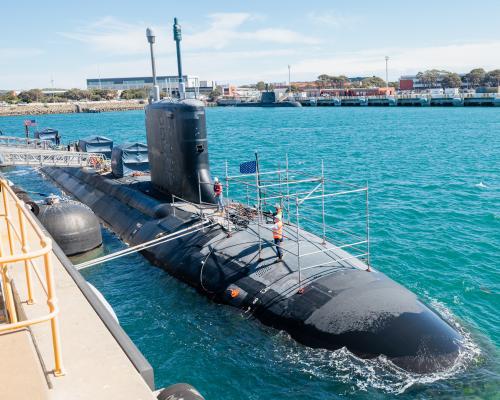
In 1998 I was appointed chief of the Australian defence force. I spent much of my career handling classified information and I understand why some things must stay secret: operational plans, intelligence sources, the capabilities on which lives depend.(我职业生涯的大部分时间都在处理机密信息,我理解为什么有些事必须保密:作战计划、情报来源、人命所系的能力。)
1998年,我被任命为澳大利亚国防军司令。我的大部分职业生涯都在处理机密信息,我理解为什么有些事必须保密:作战计划、情报来源、人命所系的能力。
But there is a difference between protecting secrets and withholding(隐瞒,扣留) reasons. On Aukus, Australians have been denied(被剥夺了) the reasons.
但保护秘密和隐瞒理由之间是有区别的。在奥库斯问题上,澳大利亚人被剥夺了知情的理由。
That is the significant lesson I take from serving as a commissioner(专员) on the Aukus public inquiry. The government and the opposition(反对党) declined written invitations(拒绝了书面邀请) to give evidence. No one serving in the Australian Defence Organisation appeared. This means the case for the most expensive defence project in our history – likely to be more than $368bn by the mid-2050s – was never put to us.(这意味着,我国历史上最昂贵的国防项目——到2050年代中期可能超过3680亿美元——其理由从未向我们陈述过。)
这就是我在担任奥库斯公共调查专员期间得到的重要教训。政府和反对党都拒绝了提供证据的书面邀请。澳大利亚国防组织中没有一个人出席。这意味着,我国历史上最昂贵的国防项目——到2050年代中期可能超过3680亿美元——其理由从未向我们陈述过。