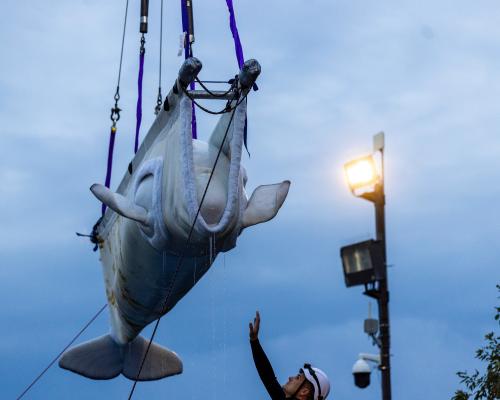
Remember “Save the whales”? Now that was an environmental campaign everyone could get behind.(那可真是一场人人都能支持的环保运动。) Surely you don’t want whales to die!
还记得“拯救鲸鱼”运动吗?那可真是一场人人都能支持的环保运动。你总不会希望鲸鱼死掉吧!
It may have got the 1986 global ban on commercial whaling over the line, but in these sophisticated times that slogan seems woefully(可悲地,极度地) reductive(过度简化的), even naive. As Greenpeace warns on its website, 40 years later: “There is still more work to be done to save the whales.”(正如绿色和平组织40年后在其网站上警告的那样:“要拯救鲸鱼,仍有更多工作要做。”) Yes. You might say, surveying the state of our ocean ecosystems, there’s quite a bit.
它或许促成了1986年全球商业捕鲸禁令的通过,但在如今这个复杂的时代,那个口号显得可悲地过于简单,甚至天真。正如绿色和平组织40年后在其网站上警告的那样:“要拯救鲸鱼,仍有更多工作要做。”是的。你或许可以说,审视一下我们海洋生态系统的状况,要做的工作还真不少。
Even saving the whales from captivity – broadly agreed to be the right thing to do ever since the Blackfish documentary, about Tilikum the orca at Seaworld in Florida – is far from an easy win.(即使是将鲸鱼从圈养中解救出来——自纪录片《黑鲸》讲述佛罗里达海洋世界虎鲸提里库姆的故事以来,这已被广泛认为是正确之举——也远非易事。) Over the past few months, I’ve been following the sorry saga(长篇故事,系列事件) of Marineland, Canada’s most famous marine park, known for its nostalgic(怀旧的) advertising jingles as a “magical place” where “the fun never stops”.
即使是将鲸鱼从圈养中解救出来——自纪录片《黑鲸》讲述佛罗里达海洋世界虎鲸提里库姆的故事以来,这已被广泛认为是正确之举——也远非易事。过去几个月,我一直在关注加拿大最著名的海洋公园Marineland的悲惨故事,它以其怀旧的广告歌而闻名,歌中称其为“神奇之地”,“欢乐永不停歇”。