The way stories are told about wars really matters. It is a point powerfully made by the classical scholar Alice König who, in her work on ancient and modern warfare, points out that the way war is depicted and narrativised feeds into the way wars are actually conducted.(古典学者爱丽丝·柯尼希有力地指出了这一点:她在研究古代和现代战争时指出,战争的描绘和叙事方式会影响战争的实际进行方式。) Creating and absorbing a story (whether that is told in prose or poetry, or offered by an artwork or memorial) is more than packaging or reflecting on the past; it is about generating images and expectations, and about envisioning(构想,展望) the future. Stories, she argues, influence real-world behaviours.
战争故事的讲述方式至关重要。古典学者爱丽丝·柯尼希有力地指出了这一点。她在研究古代和现代战争时指出,战争的描绘和叙事方式会影响战争的实际进行方式。创造和吸收一个故事(无论是用散文或诗歌讲述,还是通过艺术品或纪念碑呈现)不仅仅是包装或反思过去;它还关乎生成意象和期望,关乎构想未来。她认为,故事会影响现实世界中的行为。
The war correspondent Christina Lamb has also made this connection in relation to sexual violence in conflict: depictions of war from Homer onwards show that women have always been trafficked and raped, used as bargaining chips and spolia, their bodies made battlefields.(从荷马史诗以来的战争描绘表明,女性一直遭到贩卖和强奸,被用作讨价还价的筹码和战利品,她们的身体沦为战场。) But stories told for centuries, for millennia, have taken this violence for granted(视这种暴力为理所当然), looking blindly past(视而不见) the experience of women. Rape was recognised as an independent war crime and a tool of genocide only in 1998. And so it goes. Rape becomes a brutal and cheap weapon in every new war.
战地记者克里斯蒂娜·兰姆也把这一联系与冲突中的性暴力联系起来:从荷马史诗以来的战争描绘表明,女性一直遭到贩卖和强奸,被用作讨价还价的筹码和战利品,她们的身体沦为战场。但几个世纪、几千年来讲述的故事却将这种暴力视为理所当然,对女性的经历视而不见。强奸直到1998年才被认定为独立的战争罪和种族灭绝的工具。事情就是这样。在每一场新的战争中,强奸都成为一种残忍而廉价的武器。
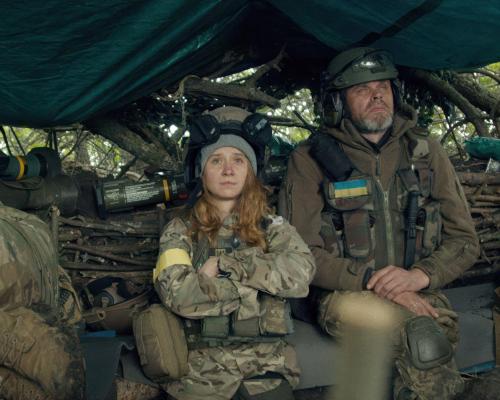
The powerful create wars; wars create power. Unless, that is, the wars go terribly wrong and reality butts into(撞入,介入) the intended narrative – see the US’s midterm elections, when the story Donald Trump wanted to tell about the Iran war was turned back against him(反过来对他不利) by the irreducible(不可化约的) fact of prices at the fuel pumps. The most bald contemporary example of the war-power feedback-loop is perhaps that of today’s Russia, where the second world war (or the great patriotic war, as the acceptable discourse has it) is constantly invoked by Vladimir Putin, seeded liberally into the wider culture and the education system; the invasion of Ukraine is then claimed as, essentially, its extension.(战争与权力反馈循环最赤裸的当代例子或许是今天的俄罗斯:弗拉基米尔·普京不断援引第二次世界大战(或按可接受话语所说的“伟大卫国战争”),将其广泛植入更广泛的文化和教育体系;对乌克兰的入侵则被宣称本质上是其延伸。) For Russian propaganda purposes, the violence against Ukraine is a “denazification(去纳粹化)”, as if the years between 1945 and 2022 had been magically collapsed.
强者制造战争;战争制造权力。除非战争出了大错,现实撞入预定的叙事——看看美国中期选举,唐纳德·特朗普想讲述的关于伊朗战争的故事,被加油站油价这一不可化约的事实反过来击中了他。战争与权力反馈循环最赤裸的当代例子或许是今天的俄罗斯:弗拉基米尔·普京不断援引第二次世界大战(或按可接受话语所说的“伟大卫国战争”),将其广泛植入更广泛的文化和教育体系;对乌克兰的入侵则被宣称本质上是其延伸。为了俄罗斯的宣传目的,对乌克兰的暴力被说成是“去纳粹化”,仿佛1945年至2022年之间的岁月被魔法般地压缩了。