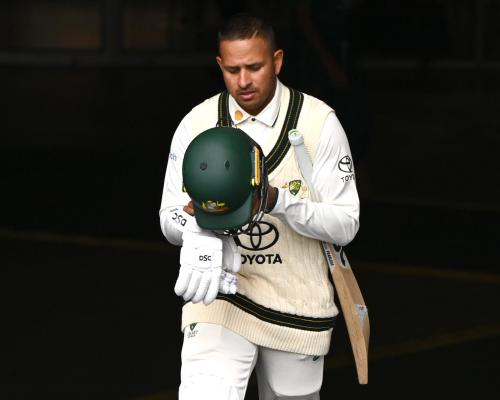
The greatest shame of the controversy inflamed(激起的;煽动的) by Usman Khawaja’s memoir Sabr is that 99% of those opining(发表意见) about it will never read it. They will experience it by quotes and summaries, magnified and distorted, elided(省略的;删去的) and exaggerated, shaped by voyeurism(窥私癖) and schadenfreude(幸灾乐祸).
乌斯曼·哈瓦贾的回忆录《Sabr》引发的争议,最大的遗憾在于:99% 对此发表意见的人根本不会去读这本书。他们只会通过引述和摘要来了解它——这些内容被放大和扭曲,被省略和夸大,受窥私欲和幸灾乐祸心理的塑造。
In fact, Sabr is a readable, surprisingly revealing, sometimes painfully frank book about a unique career. Usman is like every boy who dreamed of a baggy green(澳大利亚板球队帽) – and also not. He describes making a wish aged 10: “Please, please, please, please, God, let me play for Australia.” But he prefaces(以…开头) this with the incantation(咒语;念诵) “Allahu Akbar”, because his family at this stage is living temporarily in Saudi Arabia: he is at the Kaaba(麦加克尔白) in Mecca and too young to grasp how unusual his yearning(渴望) makes him in an Australian cricketing monoculture(单一文化). Nor can he know exactly what playing international cricket will entail – for all its satisfaction, prestige and rewards, what a brutal, baneful, exposing and lonely environment it can also be.(他也无法确切知道打国际板球意味着什么——尽管它带来满足感、声望和回报,但它也可能是一个残酷、有害、暴露且孤独的环境。)
事实上,《Sabr》是一本可读性强、出人意料地坦露心声、有时甚至直白得令人痛苦的书,讲述了一段独特的职业生涯。乌斯曼和每个梦想戴上绿色袋鼠帽的男孩一样——但也不一样。他描述了十岁时许下的愿望:“求求您,求求您,求求您,上帝,让我为澳大利亚打球吧。”但他在此之前先念了一句“真主至大”,因为此时他的家庭暂居沙特阿拉伯:他正在麦加的克尔白,年纪太小,无法理解自己的渴望在澳大利亚板球单一文化中显得多么不寻常。他也无法确切知道打国际板球意味着什么——尽管它带来满足感、声望和回报,但它也可能是一个残酷、有害、暴露且孤独的环境。
Khawaja was among the most talented batters in an Australian generation when it was not in oversupply(供应过剩), yet he played in only 22% of the national team’s total fixtures(赛事;固定项目) over that period. In particular, he appeared in barely half the Tests in the 15 years from his debut to his retirement. If he developed a carapace(硬壳;保护壳) to deal with such endless disappointment, should that surprise anyone? Sabr might mean patience or resilience in Urdu, but a strength of Khawaja’s testament(证明;证言) is that he allows the impatience to show through(显露出来). It is a cranky book because, perhaps, a degree of crankiness is what it takes to come back and back and back, when one is never sure one’s abilities are appreciated and one’s face fits.(这是一本暴躁的书,因为也许,正是需要几分暴躁,才能一次又一次地回来,当你永远不确定自己的能力是否被赏识、自己是否合群的时候。)
哈瓦贾是澳大利亚一代最有天赋的击球手之一,而当时这类人才并不过剩,然而在那段时期,他只参加了国家队全部赛事的22%。尤其是,从首秀到退役的15年间,他仅参加了不到一半的测试赛。如果他为了应对这种无休止的失望而长出了一层硬壳,这有什么好奇怪的呢?在乌尔都语中,Sabr 可能意味着耐心或韧性,但哈瓦贾这本书的一个长处在于,他让不耐烦也流露了出来。这是一本暴躁的书,因为也许,正是需要几分暴躁,才能一次又一次地回来,当你永远不确定自己的能力是否被赏识、自己是否合群的时候。