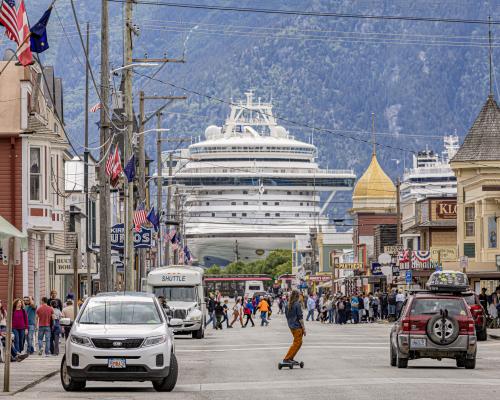
October comes to the small Alaska coastal town of Skagway like a sigh(像一声叹息). The shops that were bustling(熙熙攘攘的) throughout the crazed(疯狂的) tourist season are reducing their opening hours or beginning to close. The hordes(大批人群) of employees sleeping in overcrowded bunkhouses(工棚,简易宿舍) are leaving or have left.
十月降临阿拉斯加沿海小镇斯卡格威,像一声叹息。在整个疯狂的旅游季里熙熙攘攘的商店,如今缩短了营业时间,或者开始关门。大批睡在拥挤工棚里的员工正在离开,或者已经离开。
The crowds of cruise passengers who have filled the streets since April, wearing lanyards emblazoned with the names of their ships, have dwindled to a trickle.(自四月以来挤满街道、脖子上挂着印有船名挂绳的游轮乘客,如今已减少到寥寥无几。) Soon, they will all be gone. Snow is visible on the nearby mountains.
自四月以来挤满街道的游轮乘客,脖子上挂着印有船名的挂绳,如今已减少到涓涓细流。很快,他们都会消失。附近的山上已经可见积雪。
What is left after the season has ended and the last ship has disappeared from sight is a year-round community of about 1,100 people – on paper, at least – and the concern that, as the demands of the cruise ship industry grow, life in this small town is becoming more and more difficult.(旅游季结束、最后一艘船消失后,留下的是一个约1100人的全年社区——至少纸面上如此——以及一种担忧:随着游轮产业需求增长,小镇生活正变得越来越艰难。)
旅游季结束、最后一艘船从视野中消失后,留下的是一个约1100人的全年社区——至少纸面上如此——以及一种担忧:随着游轮产业的需求增长,这个小镇的生活正变得越来越艰难。