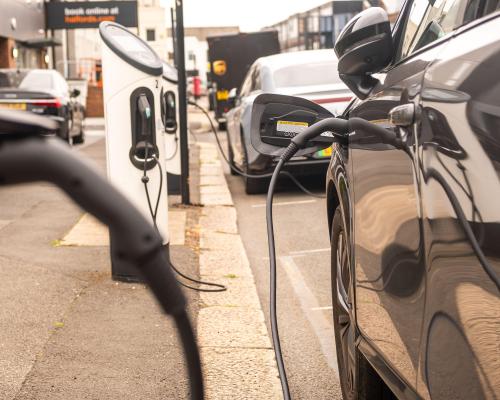
George Monbiot(英国著名环保作家和活动家) is right that European carmakers have dragged their feet(拖拖拉拉,行动迟缓), but his column describes only half the problem (Why are Britain’s streets still so polluted? Because the car industry dinosaurs do what they like, and politicians let them, 11 November). About 40% of UK households have no off-street parking(私人停车位(非路边)), rising to around 60% in urban areas.
乔治·蒙比奥特说得对,欧洲汽车制造商确实一直在拖拖拉拉,但他的专栏只描述了问题的一半(《为什么英国的街道仍然污染严重?因为汽车行业的恐龙们为所欲为,而政客们放任不管》,11月11日)。英国约40%的家庭没有私人停车位,在城市地区这一比例升至约60%。
For us, the cheap home charging that makes electric vehicles (EVs) economical(经济实惠的,省钱的) is out of reach(遥不可及,无法获得). Ministers may have removed the need for planning permission for cross-pavement charging channels(跨人行道充电槽), yet more than 20 councils still refuse them, while others, like my own Green-run council(绿党执掌的地方议会), dither(犹豫不决,拿不定主意) and leave residents waiting for a policy. (I have been waiting for over two years.)
对我们来说,让电动汽车(EV)变得经济实惠的廉价家庭充电是遥不可及的。部长们或许已经取消了跨人行道充电槽的规划许可要求,但仍有20多个地方议会拒绝批准,而其他议会——比如我所在的那个由绿党执掌的议会——则犹豫不决,让居民们苦苦等待政策出台。(我已经等了两年多。)
China did not rely on mandates(强制规定,法令) alone. It paired purchase-tax exemptions with licence-plate privileges and parking and charging discounts: a coherent carrot-and-stick(胡萝卜加大棒,软硬兼施) policy approach. Britain offers a patchwork(拼凑之物,杂乱无章的组合) instead. We need national leadership: cheaper parking and VAT-free public charging for EVs, heavier charges on the most polluting vehicles, and one national rule on pavement charging.(我们需要国家层面的领导:为电动汽车提供更便宜的停车费和免增值税的公共充电,对污染最严重的车辆征收更重的费用,并制定一项全国统一的人行道充电规则。)
中国并非只依赖强制规定。它将购置税减免与车牌特权、停车和充电折扣配套使用:这是一种连贯的胡萝卜加大棒政策。而英国提供的却是一个拼凑起来的方案。我们需要国家层面的领导:为电动汽车提供更便宜的停车费和免增值税的公共充电,对污染最严重的车辆征收更重的费用,并制定一项全国统一的人行道充电规则。