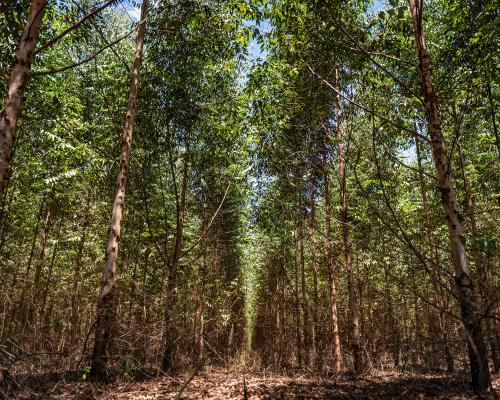
When Paracel arrived in Tacuarita, an Indigenous(原住民的) community of homes made from planks(木板) and plastic sheeting in Paraguay’s poorest region, six years ago, it was a welcome sight(受欢迎的景象). The company improved the dirt roads and dug an electric-powered well, saving villagers a two-mile journey to fetch water from a cattle pond that often made them sick.(公司改善了土路,挖了一口电动水井,让村民不必再走两英里路去一个常常让他们生病的牛塘取水。) It also gave dozens of local people forestry jobs.
六年前,当Paracel来到塔夸里塔时,这个位于巴拉圭最贫困地区、由木板和塑料布搭成房屋的原住民社区曾把它视为受欢迎的来客。公司改善了土路,挖了一口电动水井,让村民不必再走两英里路去一个常常让他们生病的牛塘取水。它还为数十名当地人提供了林业工作。
“They fulfilled(兑现) all their promises,” says Florencio Garcete, 55, chief of the Mbya Guaraní(姆比亚-瓜拉尼人) community of 211 people.
“他们兑现了所有承诺,”55岁的弗洛伦西奥·加塞特说,他是这个211人的姆比亚-瓜拉尼社区的领袖。
But today, the minimum-wage work often dwindles(减少) and the well stops working during power cuts(停电). More worrying are its eucalyptus plantations, which begin less than 200 metres from the community’s crops and homes.(更令人担忧的是它的桉树种植园,距离社区的庄稼和房屋不到200米。)
但如今,最低工资的工作常常减少,水井在停电时也无法使用。更令人担忧的是它的桉树种植园,距离社区的庄稼和房屋不到200米。