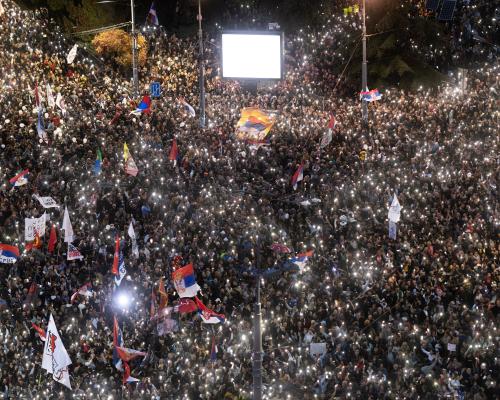
In Brazil, they rallied(集结;动员) online by the millions, sharing videos and spreading memes(表情包;网络梗). In Serbia, they cycled across Europe and ran ultramarathons(超级马拉松) to make their voices heard(让他们的声音被听见).
在巴西,数百万人通过网络集结,分享视频、传播表情包。在塞尔维亚,他们骑车穿越欧洲、跑超级马拉松,只为让自己的声音被听见。
Both movements burst(突然闯入;爆发) into international public view last month as they became central during election campaigns to the pushback against authoritarianism(威权主义). What they also offered, however, was a window into a wider phenomenon playing out across the globe, as youth-led movements reshape political landscapes.(然而,它们也提供了一个窗口,让人窥见一个正在全球上演的更广泛现象:青年主导的运动正在重塑政治格局。)
上个月,这两场运动都闯入了国际公众视野,在选举期间成为反抗威权主义的核心力量。然而,它们也提供了一个窗口,让人窥见一个正在全球上演的更广泛现象:青年主导的运动正在重塑政治格局。
“Gen Z is rising,” said Erica Chenoweth, a political scientist at Harvard Kennedy School. “It is abundantly clear that a significant proportion of gen Z is tired of sitting on the sidelines while their political systems fail them.(非常明显,相当一部分Z世代已经厌倦了在政治体制辜负他们时袖手旁观。)”
“Z世代正在崛起,”哈佛肯尼迪学院政治学家埃丽卡·切诺韦思说,“非常明显,相当一部分Z世代已经厌倦了在政治体制辜负他们时袖手旁观。”