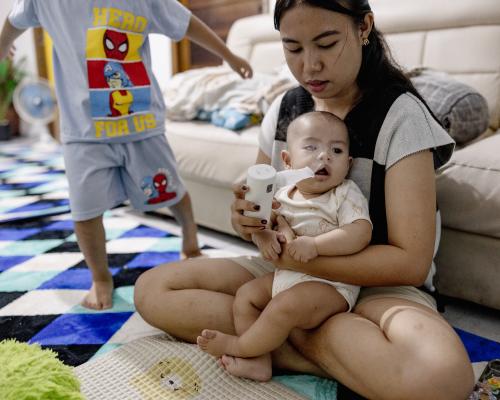
Every day in Palangkaraya starts with an air quality check. For people who can afford one, a handheld(手持的) device can test the air for toxic(有毒的) particles floating into their lungs(飘入肺部). For others, a look out the window will reveal skies turned orange with smoke.(对其他人来说,望一眼窗外,就会看到被烟雾染成橙色的天空。)
在帕朗卡拉亚,每一天都从检查空气质量开始。买得起手持检测仪的人,可以用它检测飘入肺部的有毒颗粒。其他人则只需望向窗外,就能看到被烟雾染成橙色的天空。
But for those closest to the fires ravaging this part of Indonesia, the check is done before they even open their eyes, with the acrid smell and the hacking cough that comes as they wake.(但对于最靠近肆虐印尼这一地区大火的人来说,检查在他们睁眼之前就已经完成了——醒来时,刺鼻的气味和剧烈的咳嗽就是答案。)
但对于最靠近肆虐印尼这一地区大火的人来说,检查在他们睁眼之前就已经完成了——醒来时,刺鼻的气味和剧烈的咳嗽就是答案。
On the island of Borneo(婆罗洲(加里曼丹岛)), people are facing life where the air itself is a threat. Windows are sealed(密封的) with plastic sheeting(薄膜、覆盖布), children are locked in bedrooms and families spend evenings inhaling(吸入) oxygen from tanks.
在婆罗洲岛上,人们正面临一种空气本身即是威胁的生活。窗户用塑料布封死,孩子们被关在卧室里,一家人晚上靠吸氧气罐里的氧气度日。